Hell Creek
Montana, USA · Late Cretaceous
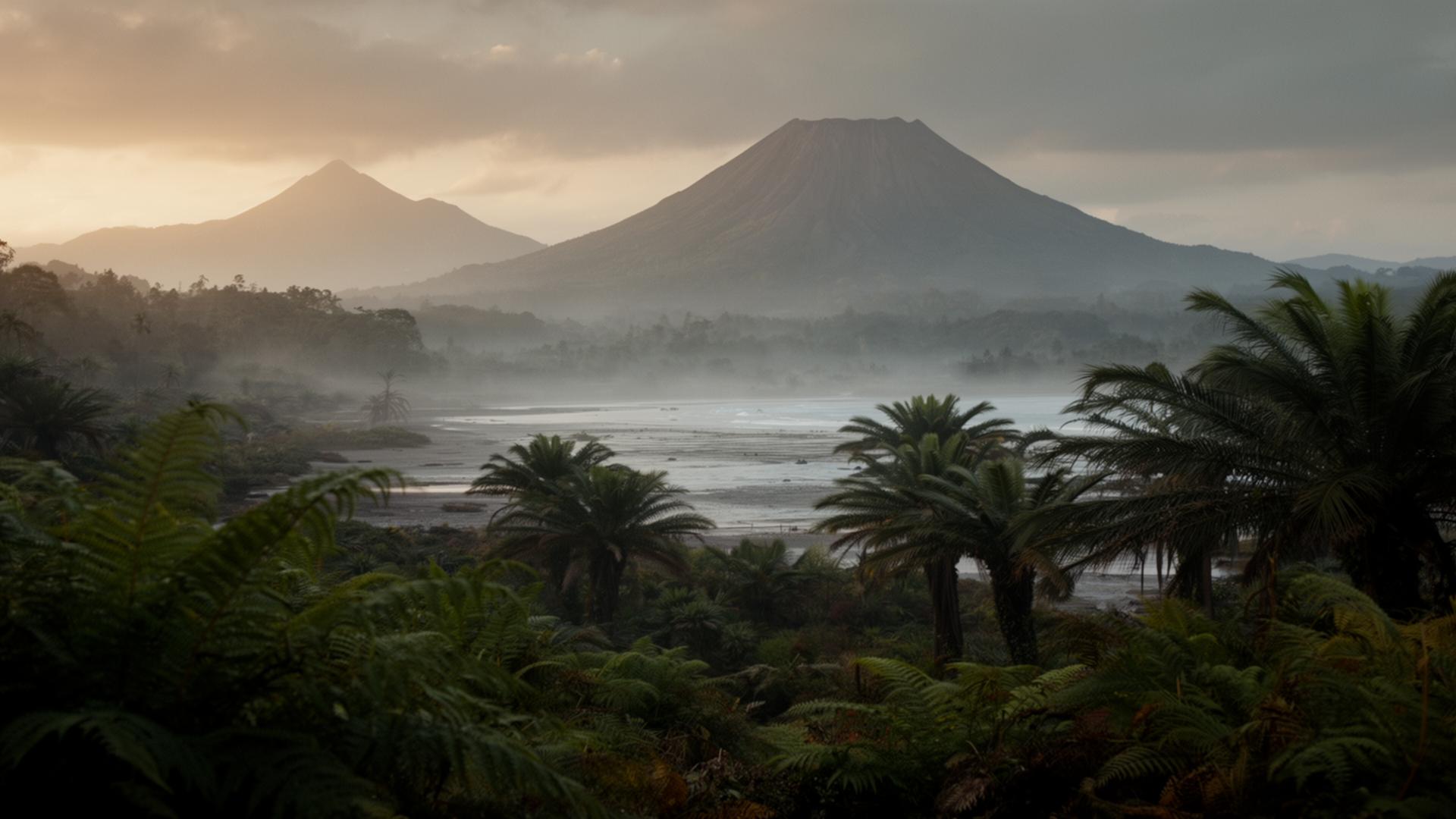
A subtropical floodplain on the eastern shore of the Western Interior Seaway. Cycads, magnolias, bald cypress. The last morning of the dinosaurs.
Who lived here
- Tyrannosaurus rex·
- Triceratops·
- Edmontosaurus·
- Ankylosaurus·
- Quetzalcoatlus·
The K–Pg iridium layer is still readable in the badlands a metre above the last bone bed.
“This is where the world ended, and then began again.”
Doggerland
North Sea · Mesolithic
A drowned country between Britain and the Netherlands. Marshes, river deltas, hunting grounds for tens of thousands of years.
Who lived here
- Mammoth·
- Aurochs·
- Red deer·
- Brown bear·
- Wild horse·
Fishing trawlers still bring up worked flint and human bone from the seabed.
“A country drowned slowly enough that people watched it happen.”
Messel Pit
Hesse, Germany · Eocene
A volcanic crater lake in a paratropical rainforest. Anoxic depths preserved feathers, stomach contents, even the colours of beetles.
Who lived here
- Darwinius·
- Propalaeotherium·
- Eurohippus·
- Palaeopython·
- Masillaraptor·
Every fossil pulled from the shale is a frame from a film no one was meant to see.
“A lake that kept every secret for forty-seven million years.”
51.433°, -116.467°
−508 Ma
Burgess Shale
British Columbia, Canada · Middle Cambrian
A muddy escarpment beneath a warm equatorial sea. The first complex animal communities on Earth, preserved by a single submarine landslide.
Who lived here
- Anomalocaris·
- Opabinia·
- Hallucigenia·
- Marrella·
- Wiwaxia·
Most of these body-plans have no living descendants. Whole branches of the tree, pruned.
“The morning life rehearsed every shape it would ever try.”
Olduvai Gorge
Tanzania · Early Pleistocene
A series of freshwater lakes on the floor of the Great Rift, ringed by acacia woodland. The cradle, or one of them.
Who lived here
- Homo habilis·
- Paranthropus boisei·
- Sivatherium·
- Pelorovis·
- Dinofelis·
Footprints in volcanic ash, three individuals walking upright, 3.6 million years old.
“We learned to walk here, and never stopped.”
Dolomites
Northern Italy · Late Triassic
Coral atolls in the warm shallow Tethys Sea. The peaks tourists hike are uplifted reefs — ancient corals, sponges, brachiopods.
Who lived here
- Megalodon (Triassic bivalve)·
- Daonella·
- Halobia·
- Ceratitids·
- Placodonts·
Every dolomite cliff is a paleo-shoreline rotated ninety degrees and pushed three kilometres into the sky.
“A coral sea raised into mountains, still legible from the road.”
Upper Amazon
Acre, Brazil · Late Miocene
Before the Amazon flowed east, this was a vast wetland — the Pebas system — draining north into the Caribbean.
Who lived here
- Purussaurus·
- Stupendemys·
- Phoberomys·
- Mourasuchus·
- Anhanguera·
The river reversed direction when the Andes finished rising. The wetland's fossils still surface on cut-banks after each flood.
“A continent's water once ran the other way.”
Beringia
Bering Strait · Last Glacial Maximum
A thousand-kilometre-wide steppe between Siberia and Alaska, kept dry by lowered seas. The route for nearly everything that crossed.
Who lived here
- Woolly mammoth·
- Steppe bison·
- Saiga antelope·
- Short-faced bear·
- Homo sapiens·
The land is now seabed 40 metres down. Mammoth tusks still wash up on St. Lawrence Island.
“A road across the world, then closed behind us.”
Joggins Cliffs
Nova Scotia, Canada · Carboniferous
A coastal coal swamp in the equatorial belt of Pangaea. Tree-sized clubmosses, dragonflies the size of crows, the first reptile.
Who lived here
- Hylonomus·
- Arthropleura·
- Meganeura·
- Lepidodendron·
- Calamites·
Upright fossil trees stand where they grew, buried by tidal mud. Tide rises 12 metres here still.
“The forest that became our coal, standing in the cliff exactly as it fell.”
White Sands
New Mexico, USA · Late Pleistocene
The margin of a vast pluvial lake, Lake Otero. Gypsum dunes today; soft lake-edge mud then.
Who lived here
- Columbian mammoth·
- Giant ground sloth·
- Dire wolf·
- American camel·
- Homo sapiens·
Human footprints crossed by giant sloth tracks — a child running, an adult stalking, twenty-two thousand years ago.
“We were already here, on the edge of a lake that is now a desert.”